MFA thesis, 2001
introduction by Amy Mooney


return

INTRODUCTION

"Vision and its effects are always inseparable from the possibilities of an observing subject who is both the historical product and the site of certain practices, techniques, institutions, and procedures of subjectification."
- Jonathan Crary, from The Techniques of the Observer


Despite their radically diverse interests, the MFA graduates approach art making with a shared concern for the engagement of the viewer. During our graduate seminar, we questioned the extent that contemporary artists acknowledge the responsibility of reaching an audience. From the sublime works of Felix Gonzalez- Torres to the deliberately ridiculous commercialism of Jeff Koons, we sensed a disjuncture between the artist's intent and the audience's comprehension of the realized object. Artists who demanded some degree of audience participation, however, seemed to avoid this schism. Such participation may be quite literal, as in moving through an installation, or more reflective, considering, for example, the history of an object before it was designated "art." In either situation, the audience member has become an active observer, looking at and thinking about the work before them. Thus, the expectation of the audience has shifted from the formation of a supposedly "objective" single interpretation of a work to a subjective experience, acknowledging the multiplicity embedded within contemporary society.

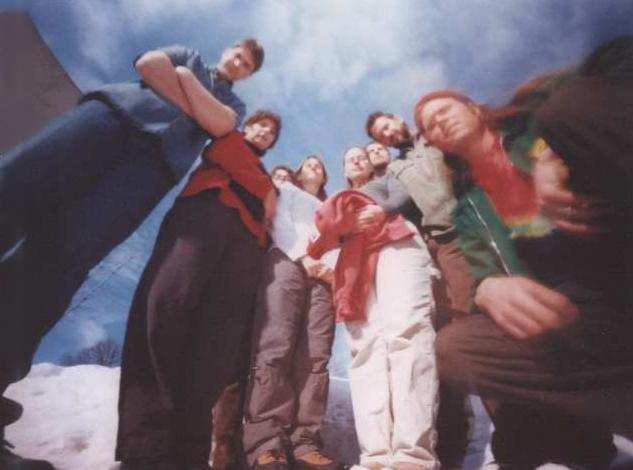
In this exhibition, each artist seeks to involve viewers in the process of looking at surface, color, texture, space then asks that viewers develop their own relationship to the work. David Schu, for example, brings the viewer into the primacy of his mark making, then leads her or him to consider the meaning of the moth forms repeated in his work. The blurred lines and intense saturation of Ryan Belnap's pinhole photographs extend the experience of the artist's own movement through static space to the viewer. In Tobe Harvey's paintings, dissonant fields of color and floating organic forms position the viewer to contemplate spatial relations and fantasy.

Instead of disavowing the viewer's role in constructing the meaning of art, as espoused by modernism, several of these artists depend upon it. Karen Kaiser's installation draws from the viewer's familiarity with fairy tales and childhood memories in order to reveal the complicated metaphors underlying these supposedly innocent and simplistic experiences. Raylene Ward's paintings demand the viewer's close inspection of countless layers of paint and other substances in order to communicate her investigation of tensions between color and form. The scale, progression of space, and orienting maps in Sarah Belnap's drawings offer the opportunity to share the artist's journey, both literally and metaphorically.

The pieces in this exhibition represent the final challenge of completing the MFA. It is not, however, an ending point. Rather, it is the moment for recognition and departure. As evident in the subject matter and formal quality of the work, these artists have achieved professional status. They will continue to create, question, and define their art beyond the structure of graduate school. Please join the faculty of the Department of Fine Arts in congratulating the artists.

Amy M. Mooney
Assistant Professor of Art History, Fine Arts
Department of Fine Arts
Washington State University

Concerning the commentary that accompanies the work:


The following observations are based on conversations with the artists. They are not intended as the definitive interpretations of the artist or their work. Rather, they represent one viewer's reaction and may serve as a beginning point for other viewers to consider while engaging with the pieces. Both the author and the artist hope that your interest and appreciation of the efforts represented here will extend beyond the written word.


TOP

Tobe Karen Raylene Sarah Cynthia David Joel Ryan